GET IN TOUCH
info@sunhilsippy.com
+91 0000000000

© 2025. SUNHIL SIPPY. all rights reserved.
EASTWARD
EASTWARD
Explorations along mumbai’s eastern seaboard
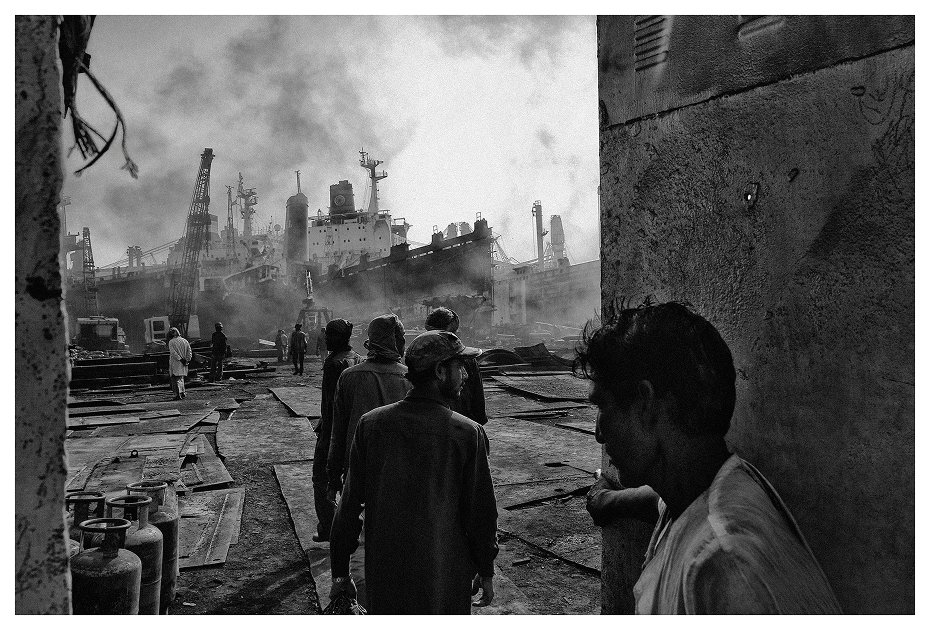
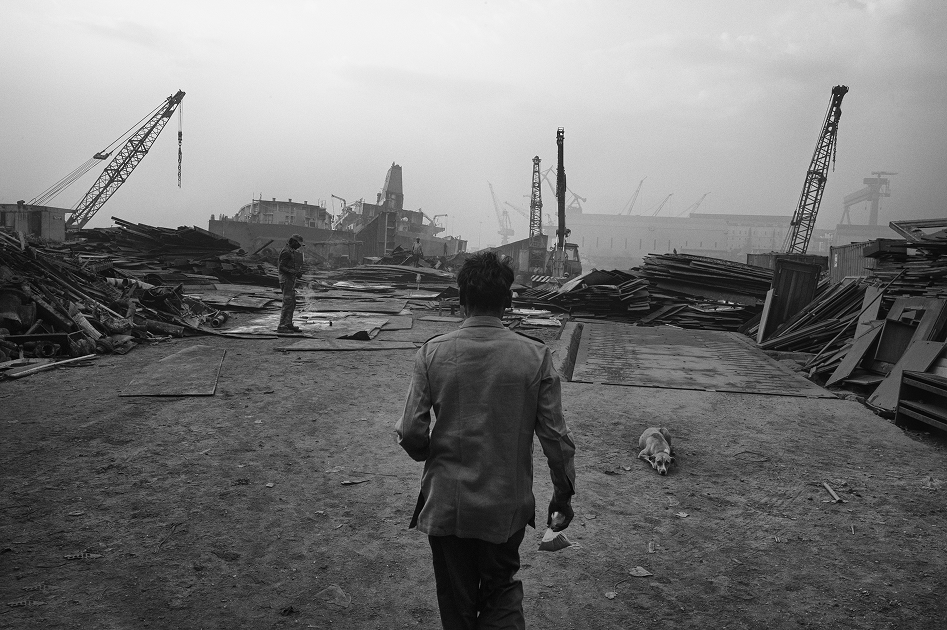
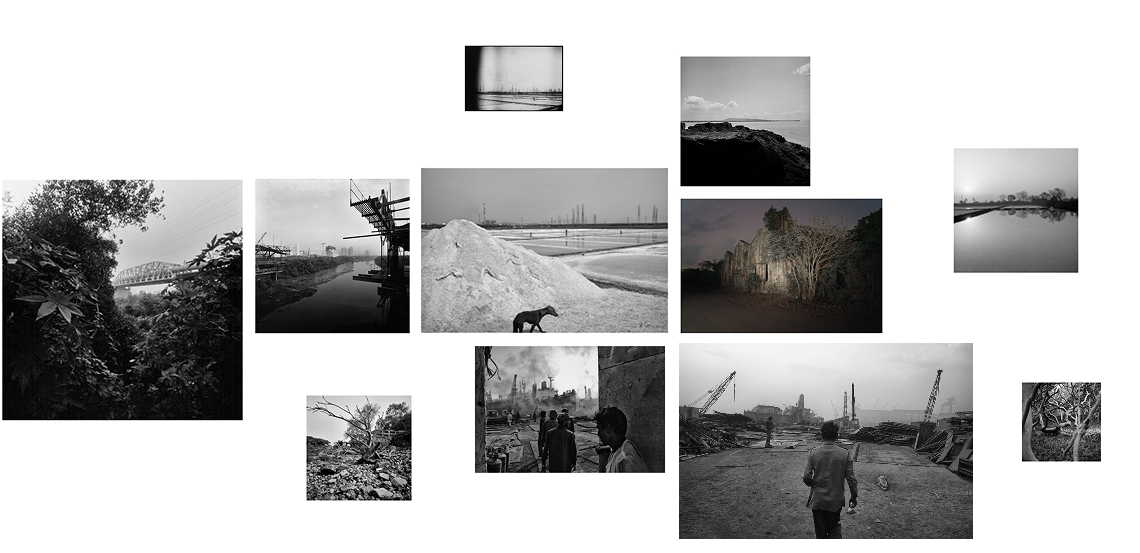
Photography, as a mode of witnessing, makes visible the relational dynamic between photographer and subject. With eastward: explorations along mumbai’s eastern seaboard, Sunhil Sippy brings this dynamic into play through the frailty and beauty he locates within ecosystems of decay, development and industry. Cultivating a raw and unfiltered engagement with the material world and its lingering stillness, he presents an archive of a less-frequented stretch of his city, now increasingly drawn into the ambitions of urban expansion.
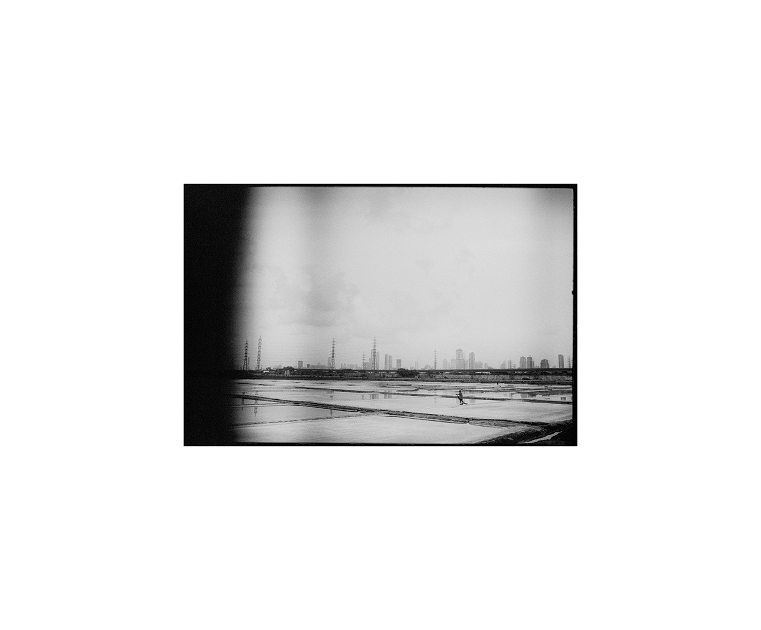
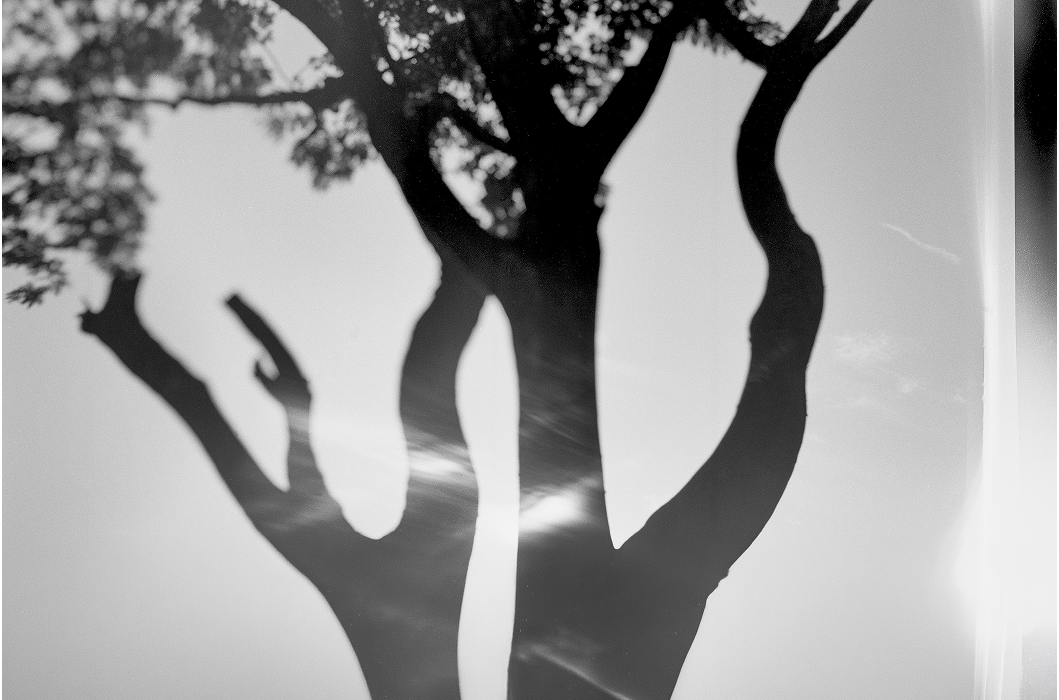
It is important to note that Sunhil returns to the same places time and again, not to document change, but to feel spaces and observe them. He stretches the boundaries of his medium, moving between analog and digital formats, as well as experimenting with double exposure and formerly discarded negatives. The photograph is rendered not simply as a form of representation, but also as a material object. The textures that his photographs carry—their tonality, their surfaces of lightness, density and graininess—are all integral to how his chosen locales are perceived.
In his more recent photographs, Sunhil has avoided the use of the viewfinder, allowing him to look directly at the landscape or subject rather than through the mediating frame of the camera. This gestures toward a reorientation of image making, one that privileges intuition and emotional responsiveness. Sunhil’s photographs then emerge as an affective encounter, exceeding composition and intent, registering instead through what moves or unsettles the viewer. With this exhibition, he makes us privy to his own emotional consciousness.
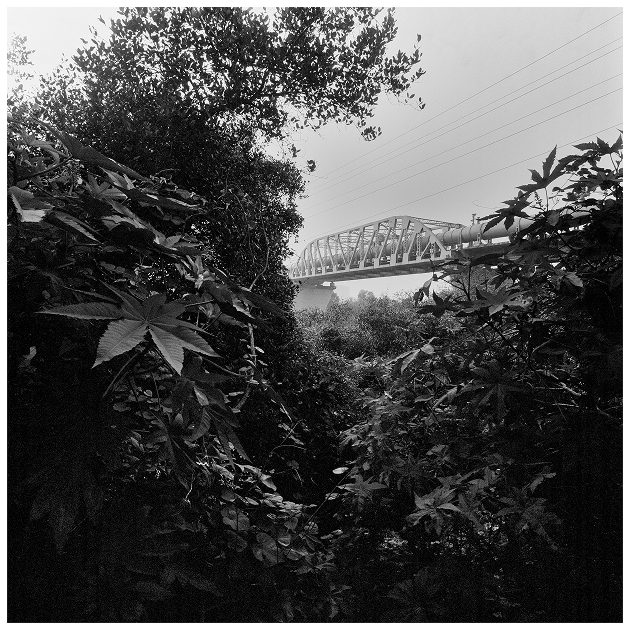
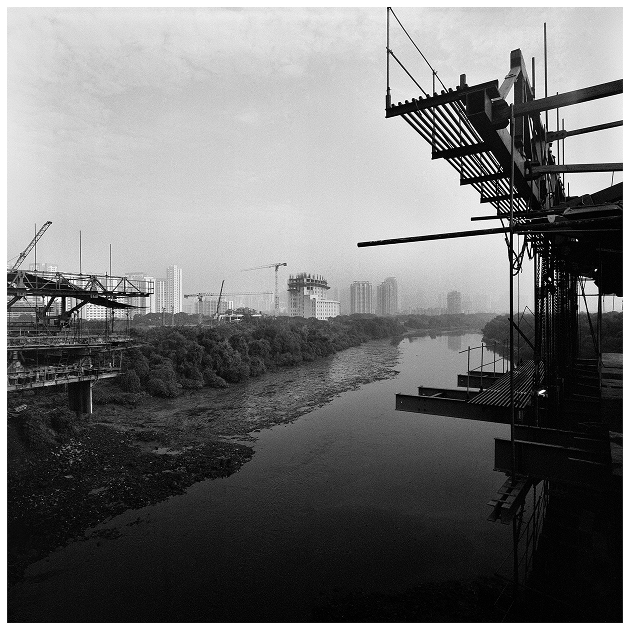
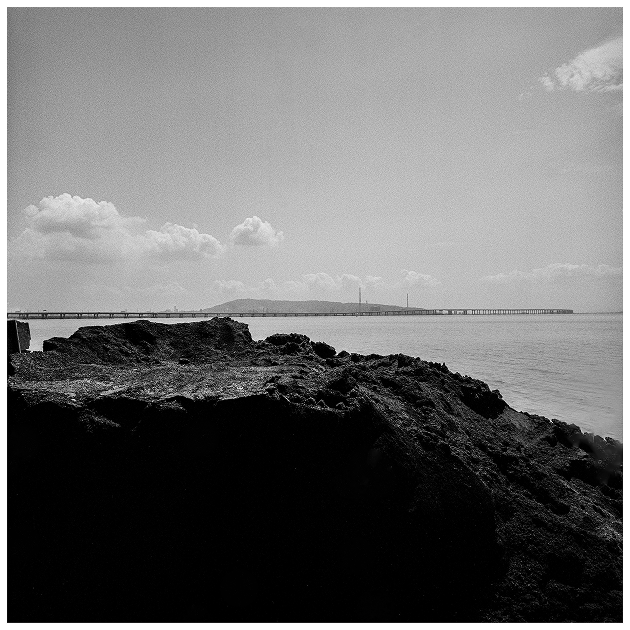
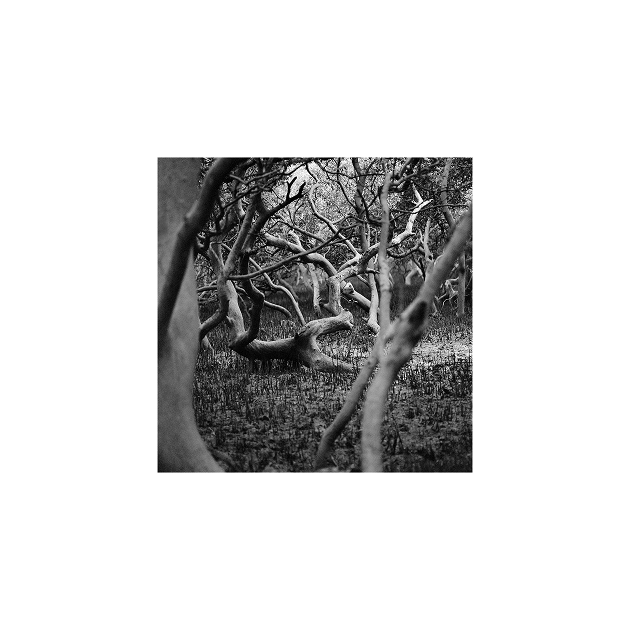
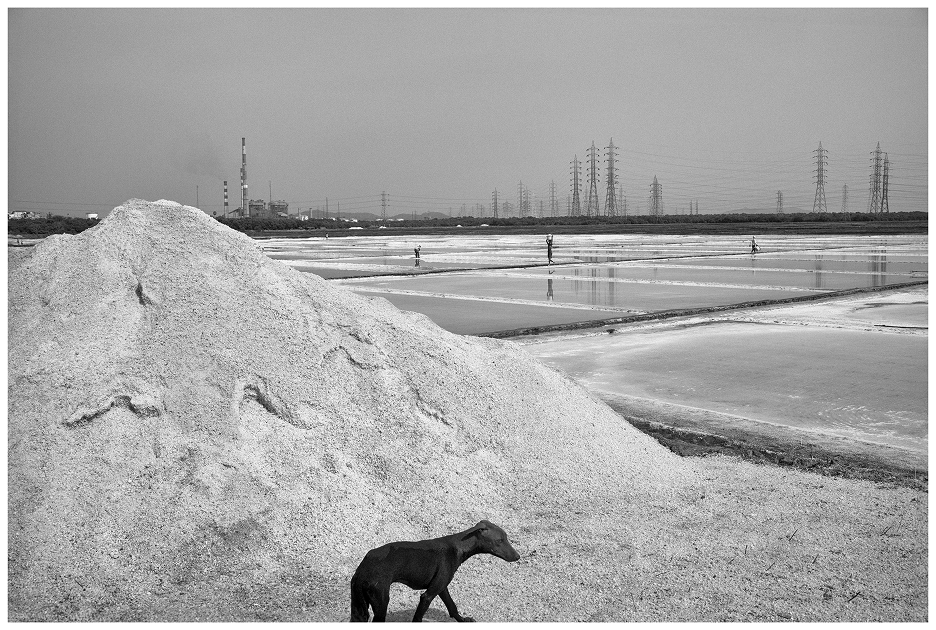
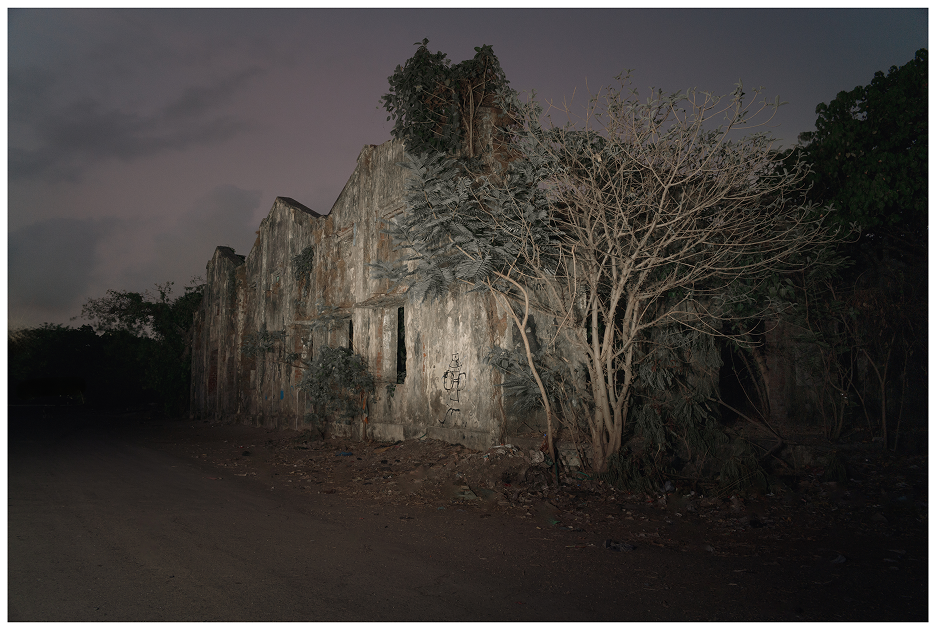
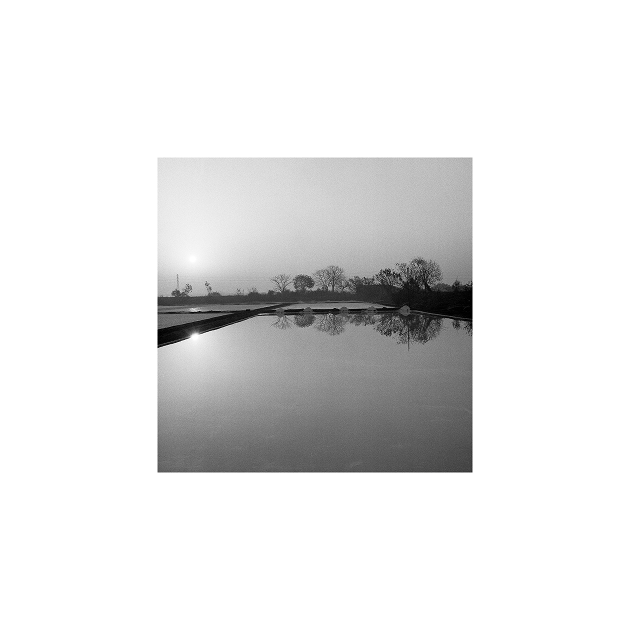
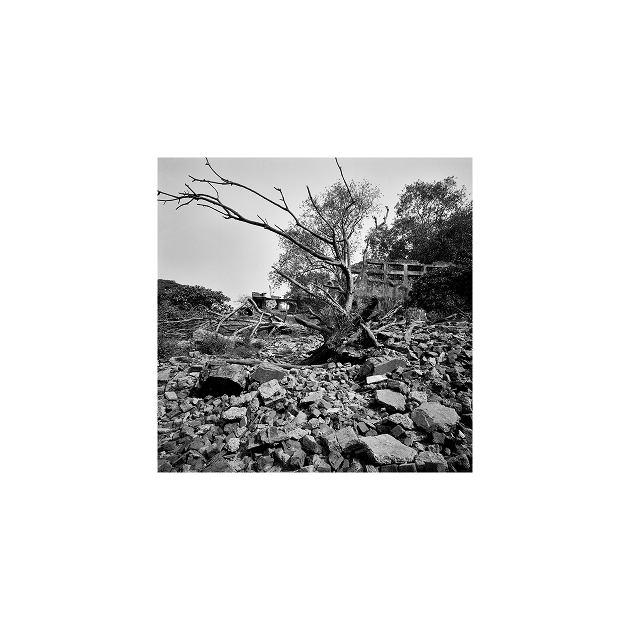
There are repeated elements within the vistas presented here. These repetitions emerge from an archive of several hundred images shot over more than a decade, where temporality can be understood as an accumulation of encounters. Dogs appear stark against trucks and elongated slopes, adding an element of softness to otherwise gritty environs. Knotted trees and roots twist through certain frames, echoing the knotted human bodies hard at work. Rocks offer moments of stability, while flat bodies of water glimmer through the grit of industrial terrain.
The infrastructural architecture of towers, poles and bridges emerge and recede, at times sharply outlined, at others barely discernible in the particulate atmosphere of Mumbai. The air becomes the medium through which these visualities are revealed, producing a field of shifting perception and dissonance. In this interplay of elements, beauty emerges as a form of resistance forged through tension and nuance. As Robert Adams suggests, photographic beauty can be understood as a form of coherence that reckons with damage, fragility, sadness, and moments of strength.
In Sunhil’s photographs, such beauty resides in the capacity of the image to hold together decay and resilience, offering new ways of seeing landscapes marked by precarity.